

University of Texas FAS
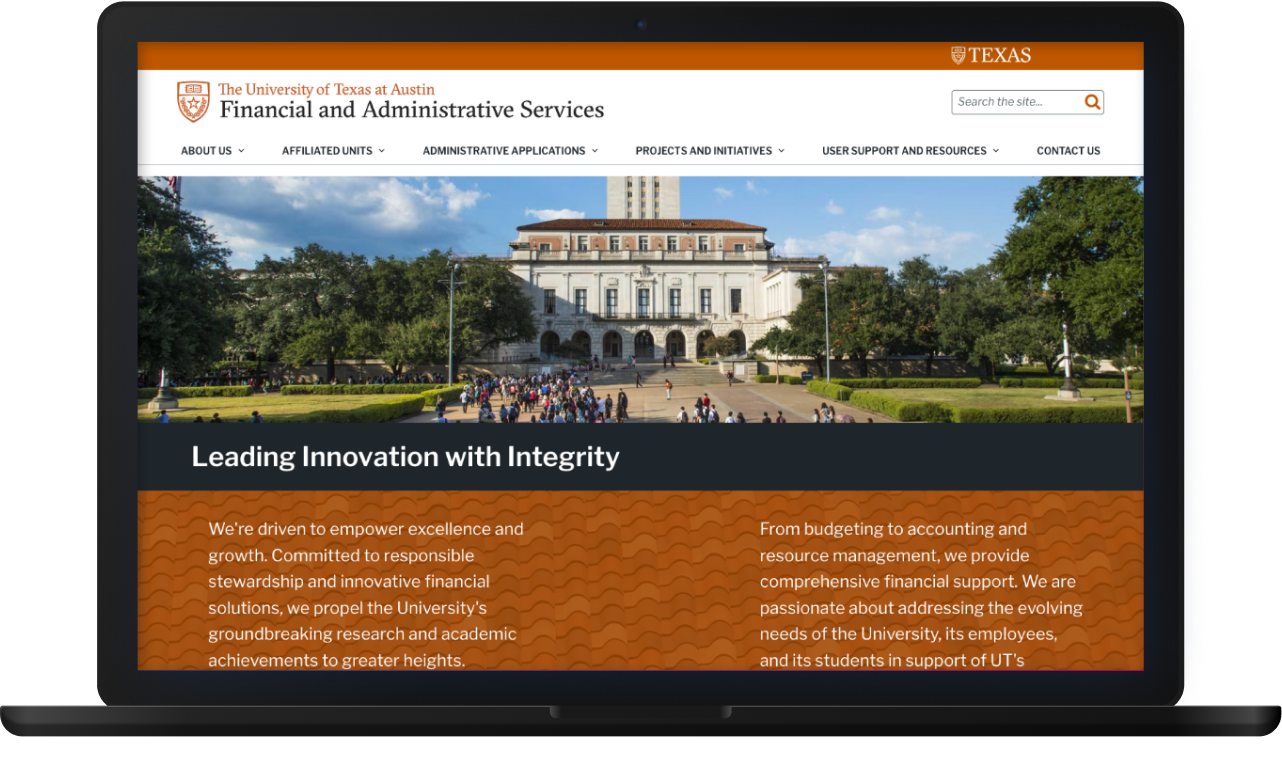
At a university as large and complex as the University of Texas at Austin, Financial and Administrative Services (FAS) plays a critical behind-the-scenes role. From finance and procurement to operational support, FAS serves thousands of students, faculty, and staff every day. Their website functions as a front door to these services—yet over time, that door had become difficult to navigate.
Project
Overview
University of Texas approached Spruce with a clear goal: transform their website into a modern, intuitive experience that truly supported the people who relied on it.
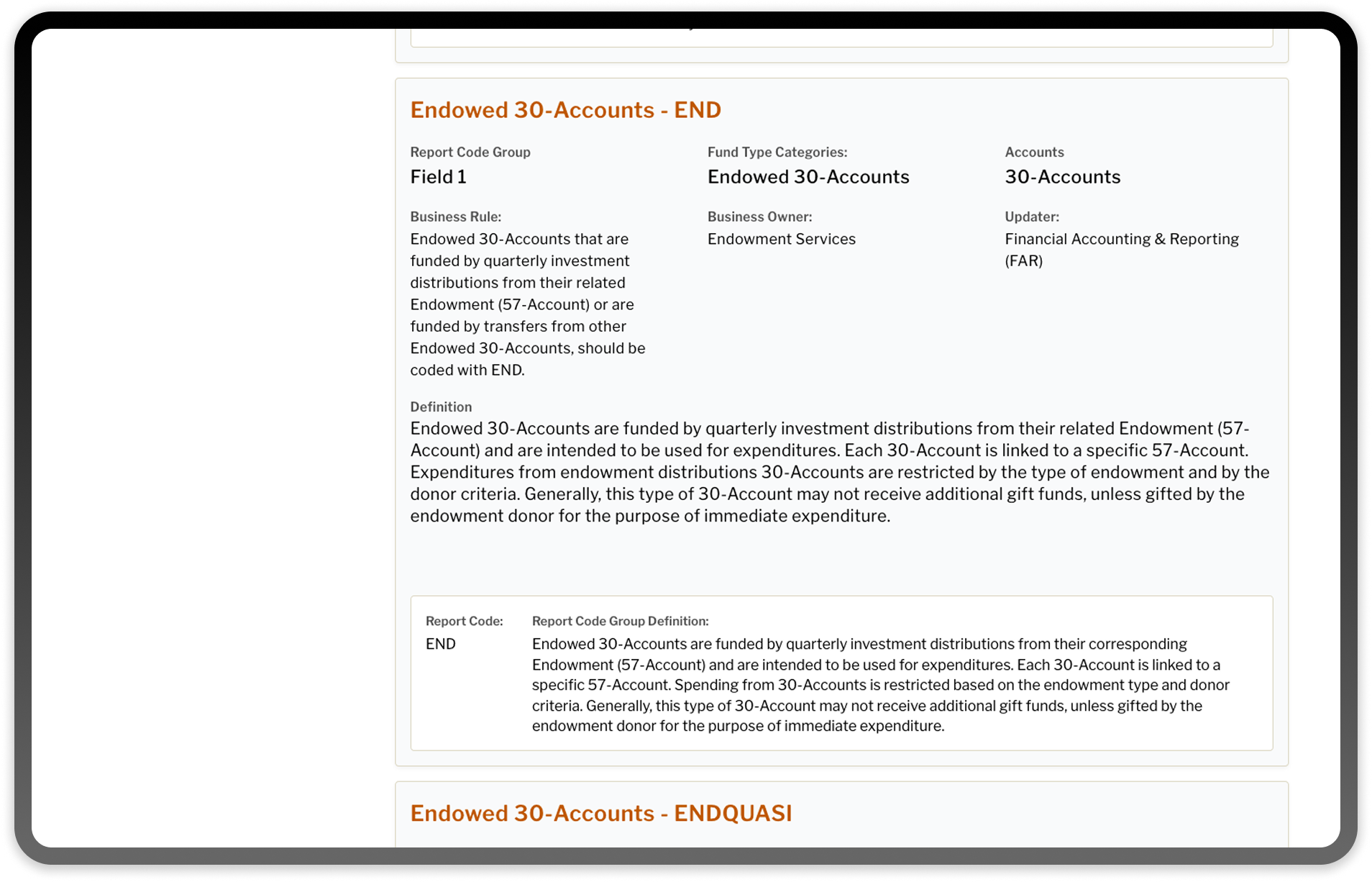
The existing site had grown organically over time, resulting in cluttered navigation, inconsistent layouts, and friction for users trying to find essential information quickly. This project wasn’t just a visual refresh—it was an opportunity to rethink how FAS communicated its services digitally and how users moved through a complex ecosystem of departments and resources.
Operating within the higher education and public sector space, the project required a thoughtful balance of usability, accessibility, governance, and scalability.
[Challenge / Problem Statement]
The primary challenge was complexity. FAS serves multiple audiences with very different needs, all within the constraints of a large university IT ecosystem. Users often landed on the site unsure where to go next, while internal teams struggled to maintain content efficiently.
At the same time, the website needed to:
• Integrate seamlessly with UT’s Drupal Kit and publishing workflows
• Meet strict ADA accessibility requirements
• Scale as departments and content evolved
The question became: How do you simplify a complex system without oversimplifying the services behind it?
Our
Approach
Spruce delivered a comprehensive, user-centered redesign grounded in research, collaboration, and scalable development practices.
Spruce began by listening. Through stakeholder interviews and collaborative working sessions, we gained a clear understanding of how different departments operated and how users actually interacted with the site. These insights revealed patterns, pain points, and opportunities to streamline the experience.
The development team worked closely with UT’s IT department to ensure seamless integration with existing systems. The result was a scalable, maintainable site structure that allowed FAS teams to manage content independently after launch.
Consistent Information Architecture
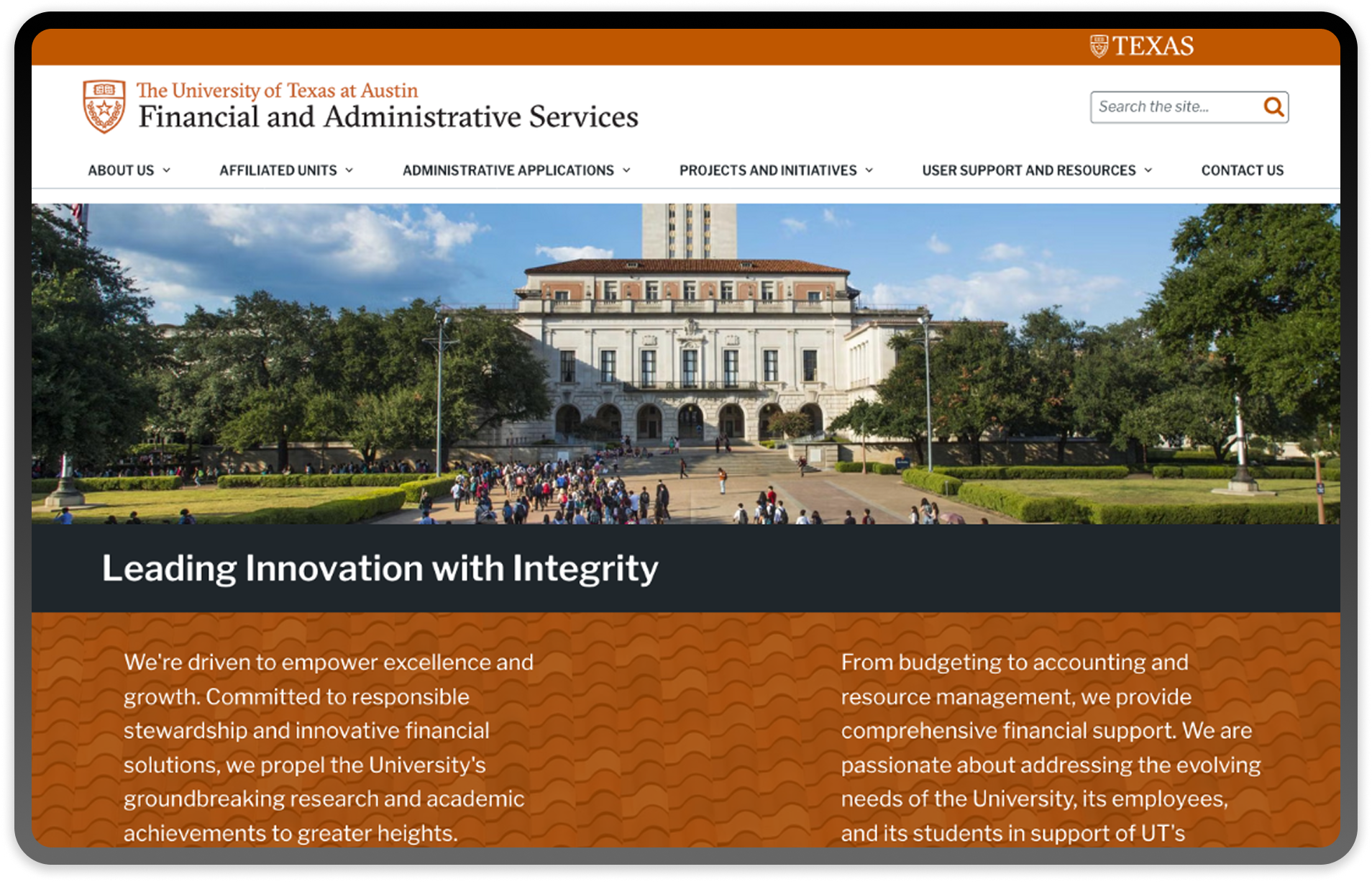
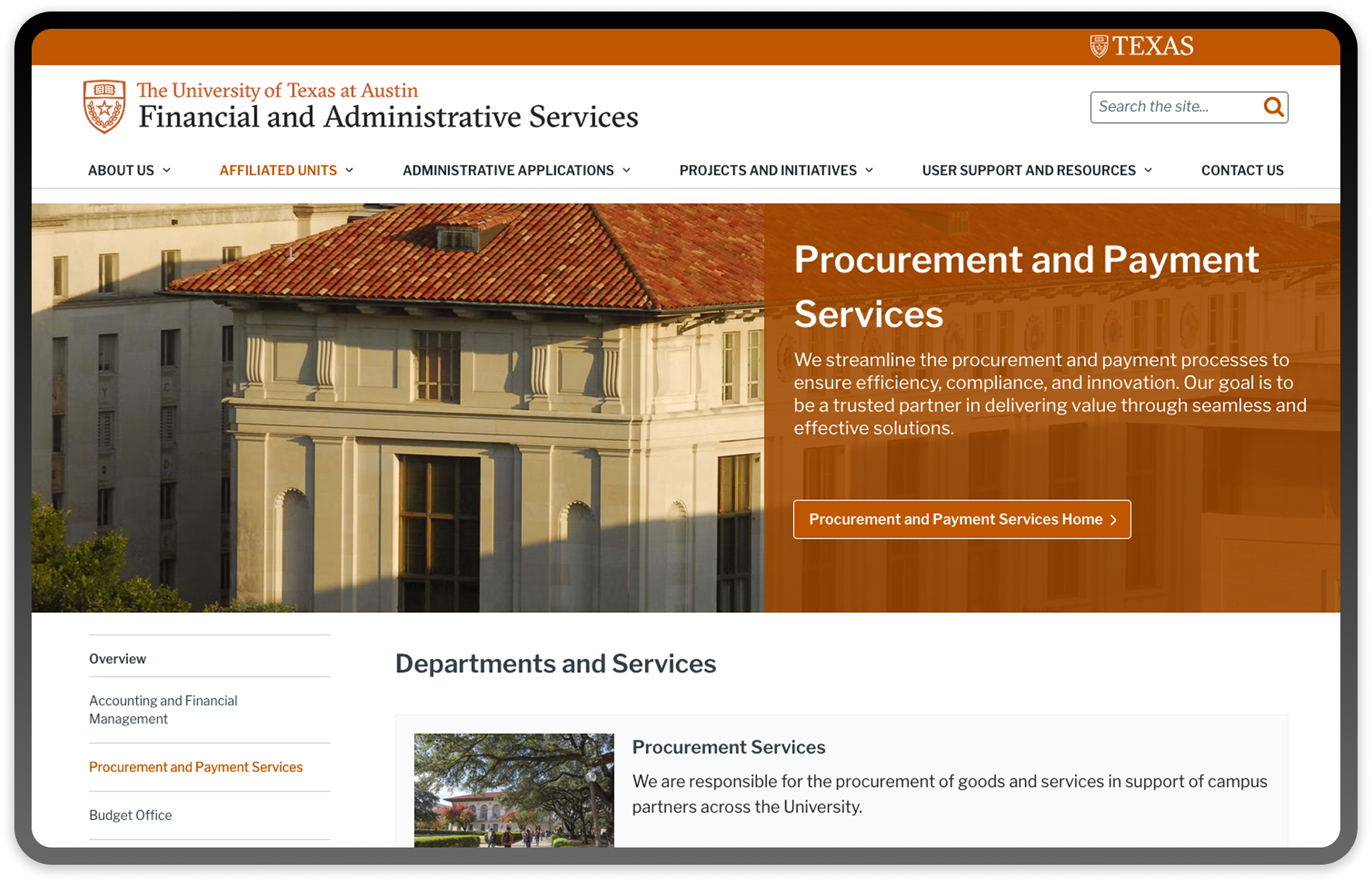
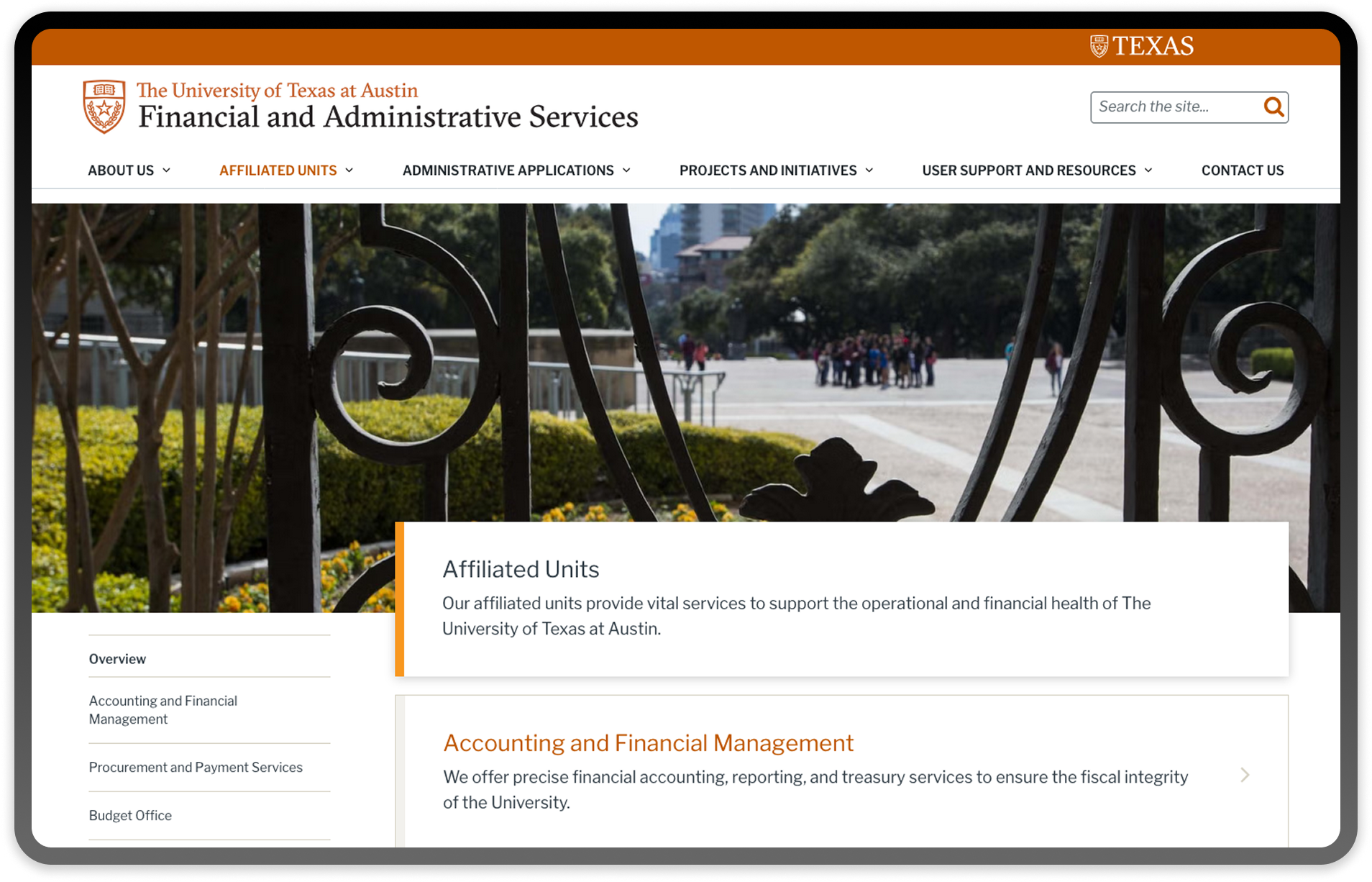
We restructured the site’s information architecture to prioritize clarity and task-based navigation, ensuring users could quickly find what they needed without unnecessary friction. We focused on areas of information (i.e. departments) and our primary user groups to enhance findability and foster a stress-free experience.
UI & Brand Identity
The University’s established brand guidelines provided a strong foundation, offering a comprehensive system for color, imagery, and layout. Building within this framework, we thoughtfully extended the existing Drupal component library—enhancing interactivity and flexibility while preserving brand consistency. The result was a modern, cohesive experience that feels distinctly UT while elevating usability and visual clarity.
Drupal
On the development side, our team worked hand-in-hand with UT’s IT department to build within the Drupal ecosystem. The site was engineered to be flexible and easy to maintain, empowering FAS teams to manage and update content independently after launch—without sacrificing consistency or accessibility.
WCAG/ADA Compliance Tooling
Accessibility was woven into every phase of the process, from design decisions to technical implementation, ensuring the site met ADA standards and delivered an inclusive experience for all users.
Consistent Information Architecture
We restructured the site’s information architecture to prioritize clarity and task-based navigation, ensuring users could quickly find what they needed without unnecessary friction. We focused on areas of information (i.e. departments) and our primary user groups to enhance findability and foster a stress-free experience.
UI & Brand Identity
The University’s established brand guidelines provided a strong foundation, offering a comprehensive system for color, imagery, and layout. Building within this framework, we thoughtfully extended the existing Drupal component library—enhancing interactivity and flexibility while preserving brand consistency. The result was a modern, cohesive experience that feels distinctly UT while elevating usability and visual clarity.
Drupal
On the development side, our team worked hand-in-hand with UT’s IT department to build within the Drupal ecosystem. The site was engineered to be flexible and easy to maintain, empowering FAS teams to manage and update content independently after launch—without sacrificing consistency or accessibility.
WCAG/ADA Compliance Tooling
Accessibility was woven into every phase of the process, from design decisions to technical implementation, ensuring the site met ADA standards and delivered an inclusive experience for all users.
Results &
Key Impacts
A clear, cohesive, and user-friendly platform—one that finally matched the importance of the services it supports.
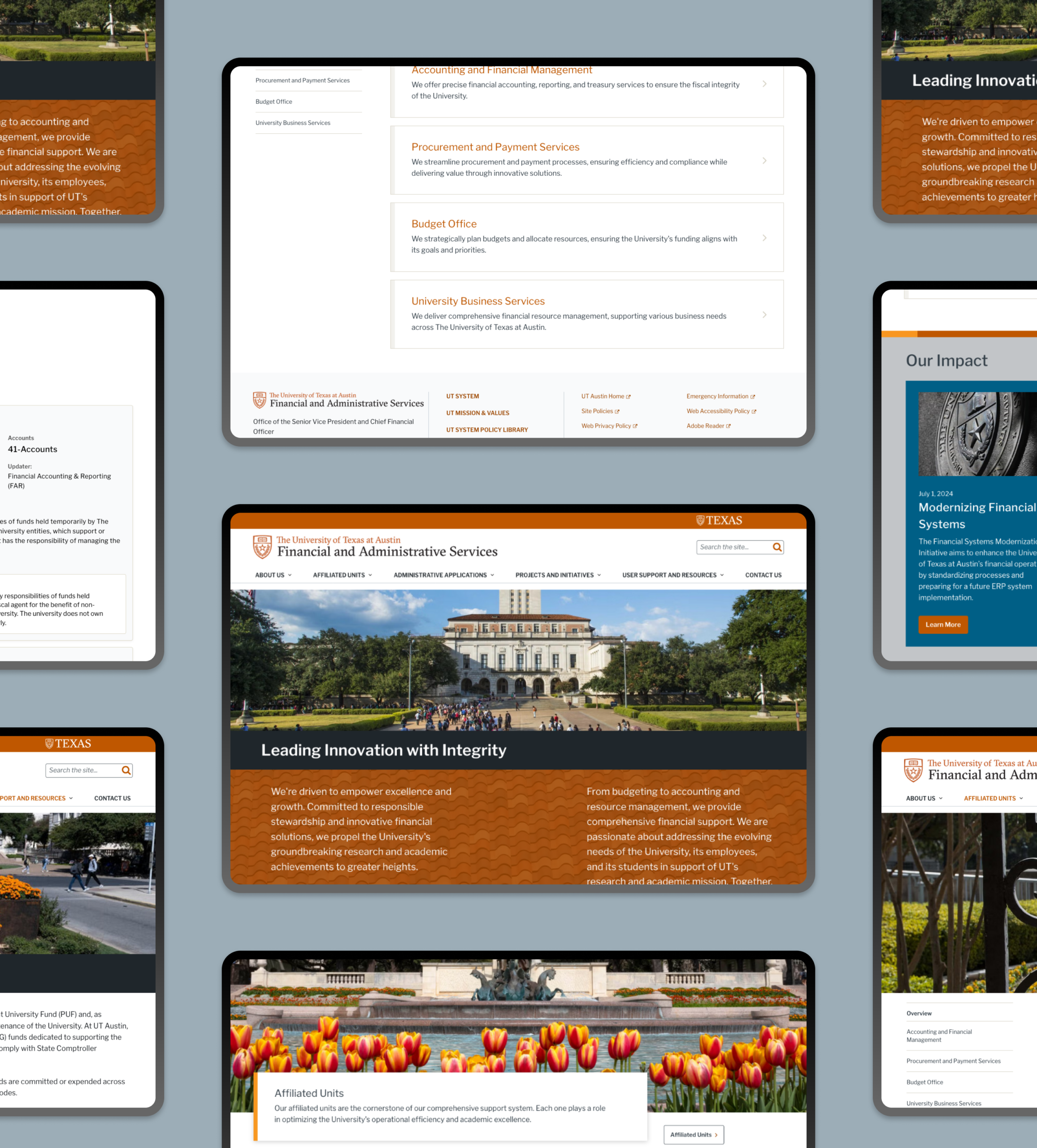
The redesigned FAS website launched as a streamlined, accessible, and visually cohesive digital platform. It provided a significantly improved user experience, with intuitive navigation, enhanced mobile performance, and a design that reflected the department’s commitment to service excellence. Users can now navigate confidently across devices, quickly access critical resources, and understand where to go next.
Key outcomes included:
• A streamlined, intuitive navigation structure
• A fully responsive and accessible design
• Seamless integration with UT’s Drupal and IT workflows
• A scalable foundation that supports future growth
More than a redesign, the project resulted in a digital experience that reflects FAS’s commitment to service, clarity, and operational excellence—turning a complex system into an experience that feels straightforward and supportive.
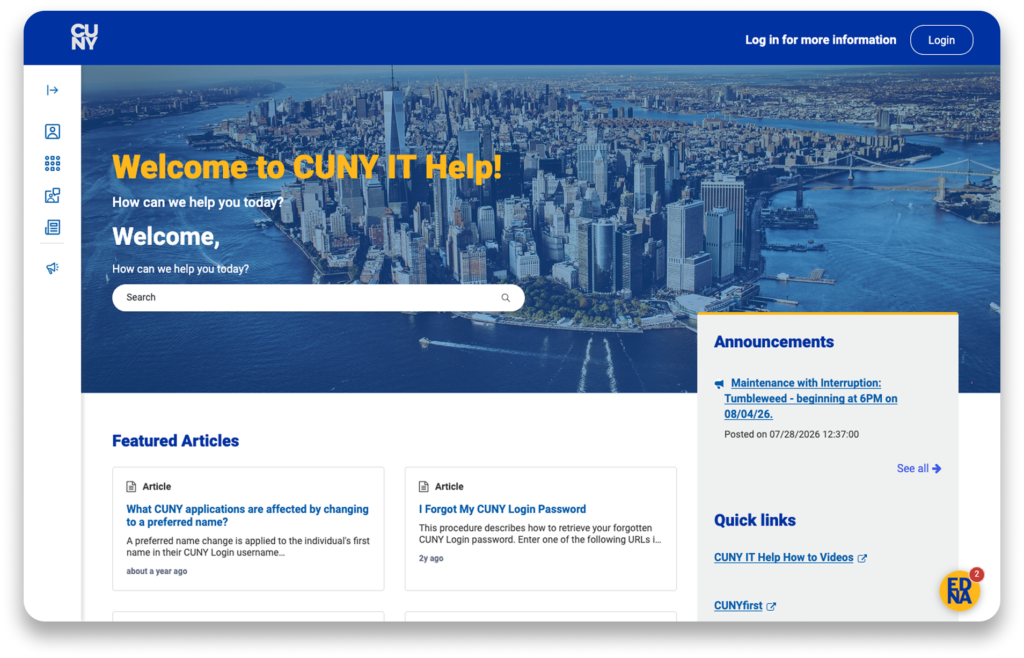
Platform Development / CUNY IT Helpdesk Portal
The City University of New York (CUNY) is the nation’s largest urban public university, with 25 colleges and professional schools serving over 275,000 students, faculty, and staff across New York City.
Website Design & Development / Office of the Senate Legislative Counsel
The Office of the Senate Legislative Counsel provides expert, nonpartisan drafting assistance to United States Senators and Senate committees — playing a critical but often behind-the-scenes role in the legislative process.

No projects found in this category.
Join our
Team!
We genuinely look forward to connecting with you and learning about your vision. Our team is dedicated to creating meaningful solutions that help your business thrive.